Introduction
The ready-to-eat (RTE) food market in India is growing rapidly, driven by changing lifestyles, urbanization, and global demand for convenient Indian meals. While many brands focus on selling ready-to-eat meals directly to consumers, there is a major difference between a retail RTE brand and a manufacturer of ready-to-eat foods.
For distributors, importers, food startups, private label brands, and institutional buyers, understanding this difference is critical before choosing a long-term supply partner.
In this blog, we break down the key differences between ready-to-eat food manufacturers and retail RTE brands and explain why manufacturers are the preferred choice for B2B buyers.
What Defines a Ready-to-Eat Food Manufacturer?
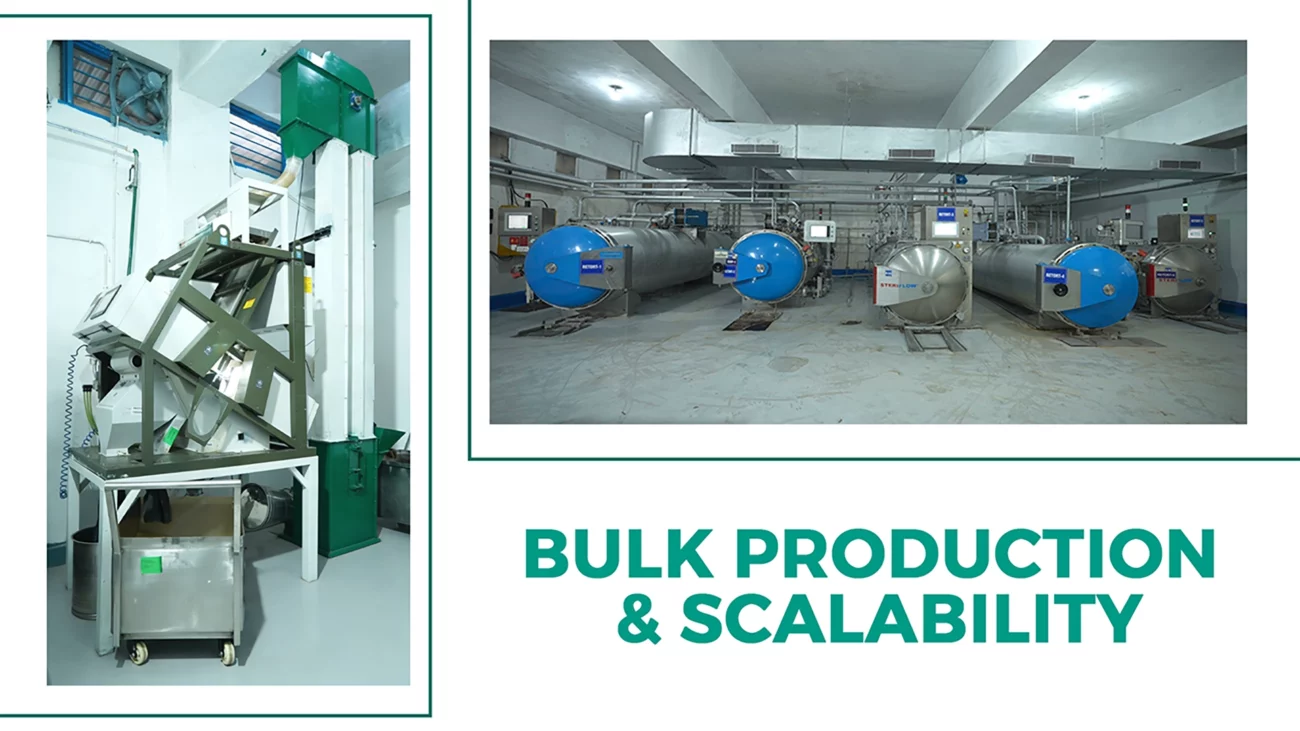
A ready-to-eat food manufacturer in India specialises in large-scale production of RTE and RTC meals for businesses rather than direct consumers. These manufacturers focus on:
- Bulk production and scalability
- Consistent taste and quality
- Shelf-stable and export-ready packaging
- Private label and white-label services
- Compliance with FSSAI and international food standards
Manufacturers supply products to retailers, distributors, exporters, food service companies, airlines, institutions, and global brands.
What Is a Retail Ready-to-Eat Brand?
Retail RTE brands primarily target end consumers. Their focus is on:
- Brand visibility and marketing
- Small consumer packs
- Limited product customization
- Selling via D2C websites, marketplaces, and retail stores
While retail brands are ideal for individual consumption, they are often not designed to handle bulk orders, private labelling, or export-scale requirements.
Key Differences: Manufacturer vs Retail RTE Brand
1. Production Capacity
A ready-to-eat food manufacturer is built for high-volume production, making them suitable for bulk orders and long-term contracts. Retail brands usually operate on smaller batch sizes focused on direct sales.
2. Private Label & Customisation
Manufacturers offer:
- Custom recipes
- Brand-specific packaging
- White-label and private label services
Retail brands rarely allow product customisation, as their priority is promoting their own brand.
3. Quality Control & Compliance
Manufacturers invest heavily in:
- Quality assurance systems
- Food safety protocols
- Export compliance and shelf-life testing
This makes manufacturers the preferred choice for exporting ready-to-eat food from India.
4. Pricing & Commercial Viability
Bulk manufacturing allows better cost efficiency, making manufacturers ideal for B2B buyers seeking:
- Competitive pricing
- Stable supply
- Long-term scalability
Retail brands often carry higher per-unit costs due to marketing and branding expenses.
Why B2B Buyers Should Choose a Ready-to-Eat Food Manufacturer
If you are a:
- Distributor
- Importer
- Private label brand
- Food startup
- Institutional buyer
Partnering with a ready-to-eat food manufacturer in India offers clear advantages:
- Reliable bulk supply
- Custom branding opportunities
- Export-ready products
- Consistent quality and taste
- Faster market expansion
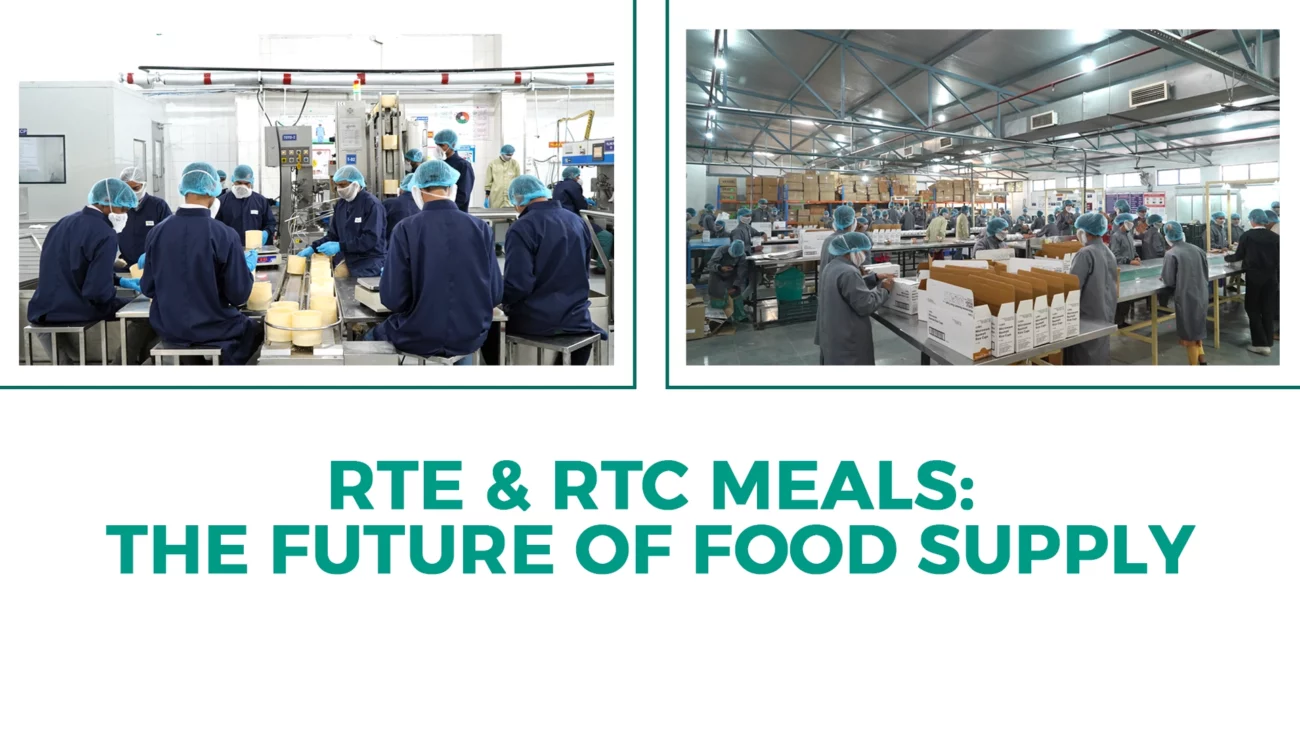
RTE & RTC Meals: The Future of Food Supply
With global demand increasing for Indian cuisine, RTE and RTC meals are becoming a preferred category for international markets. Manufacturers play a critical role by ensuring:
- Shelf-stable products
- Authentic Indian flavors
- Scalable production for global demand
Choosing the right manufacturing partner ensures long-term success in a highly competitive market.
The Ready-to-Eat (RTE) food market in India is witnessing an unprecedented surge, fueled by rapid urbanisation,shifting consumer lifestyles, and a global appetite for authentic Indian cuisine. However, for B2B stakeholders—importers, distributors, and institutional buyers—there is a critical distinction to make: The difference between a retail RTE brand and a specialized RTE food manufacturer.
While retail brands dominate the shelves, manufacturers drive the engine of the industry. Understanding this distinction is vital for securing a reliable, scalable, and profitable supply chain.
What Defines a Ready-to-Eat Food Manufacturer?
Unlike consumer-facing brands, a ready-to-eat food manufacturer focuses on large-scale production, technical compliance, and B2B partnerships. Their core competencies include:
- Mass Scalability: Equipped for high-volume, consistent output.1
- Technical Expertise: Advanced retort processing and shelf-stability engineering.
- Customization: Ability to develop bespoke recipes and private-label solutions.
- Global Compliance: Adherence to FSSAI, FDA, and international food safety standards (BRC, IFS, etc.).
What Defines a Retail RTE Brand?
Retail brands are marketing-centric entities that target the end-user. Their primary focus remains:
- Brand Equity: Investing in marketing, advertising, and shelf presence.
- Consumer Packaging: Small-format packs designed for individual use.
- Fixed Catalogues: Limited flexibility to change ingredients or packaging for third parties.
Key Comparisons: At a Glance
| Feature | RTE Manufacturer | Retail RTE Brand |
| Primary Goal | Operational Excellence & B2B Support | Market Share & Consumer Loyalty |
| Volume Capability | High-capacity bulk production | Batch production for retail stock |
| Customization | Full (Recipes, Packaging, Branding) | Minimal to None |
| Cost Structure | Factory pricing (Economies of Scale) | Markup pricing (Marketing overheads) |
| Export Readiness | High (Built for international logistics) | Variable (Often limited to domestic specs) |
Why B2B Buyers Prioritise Manufacturers
For distributors, food startups, and institutional buyers, partnering directly with a manufacturer offers a strategic edge:
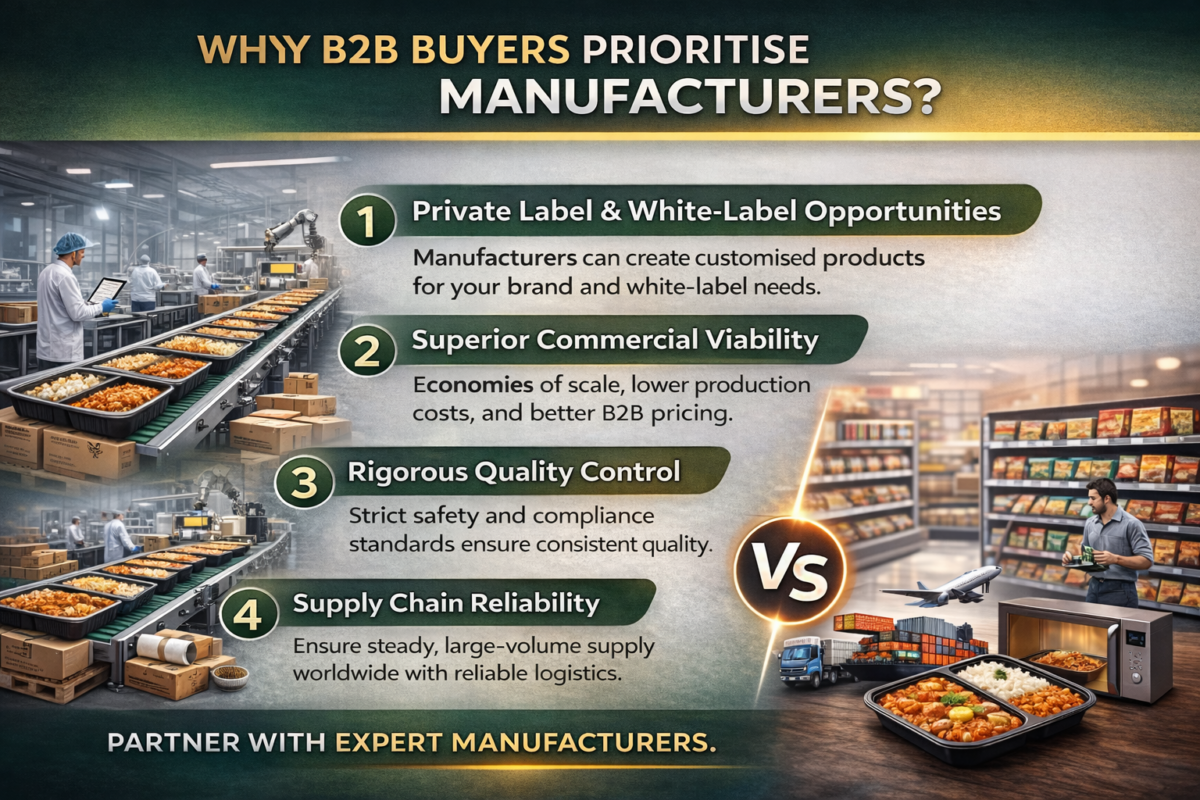
1. Private Label & White-Label Opportunities
Manufacturers empower you to build your own brand. They provide the infrastructure to launch custom product lines without the need for a physical factory, offering everything from custom formulation to brand-specific packaging.2
2. Superior Commercial Viability
By eliminating the “middleman” branding costs, manufacturers offer significantly better margins. This cost efficiency is essential for B2B buyers looking to maintain competitive pricing in global markets.
3. Rigorous Quality Control
Manufacturers invest heavily in the science of food preservation. Their facilities are often equipped with advanced R&D labs to ensure that products remain shelf-stable for 12–24 months without losing flavour or nutritional value—a non-negotiable factor for the export of Indian meals.
4. Supply Chain Reliability
A manufacturer controls the source. For an importer or large-scale distributor, this means consistent lead times and the ability to scale orders upward as market demand grows, without the risk of retail stockouts.
The Future of Global Food Supply: RTE & RTC (Indian ready-to-eat food manufacturers)
The global shift toward Ready-to-Eat (RTE) and Ready-to-Cook (RTC) meals is not just a trend; it is a permanent change in how the world eats. Manufacturers are the backbone of this transition, ensuring that authentic Indian flavours—from Dal Makhani to Paneer Tikka—reach global dinner tables with safety and consistency.
Conclusion
For a B2B buyer, the choice is clear. While retail brands are great for consumers, a Ready-to-Eat food manufacturer is the partner you need for long-term growth, scalability, and market dominance.